
Breton: Mad Love, Mad Light
1August 30, 2025 by tsk2001
I have a used copy of Breton’s Mad Love, translated by the great Mary Ann Caws, and it’s one of those used books that someone marked up for a class. This can be quite annoying, but in addition to the usual underlining there are a number of phrases that are boxed, as if they require extra attention. And they are going to get just that. Here’s a box on an unusually decorative page.
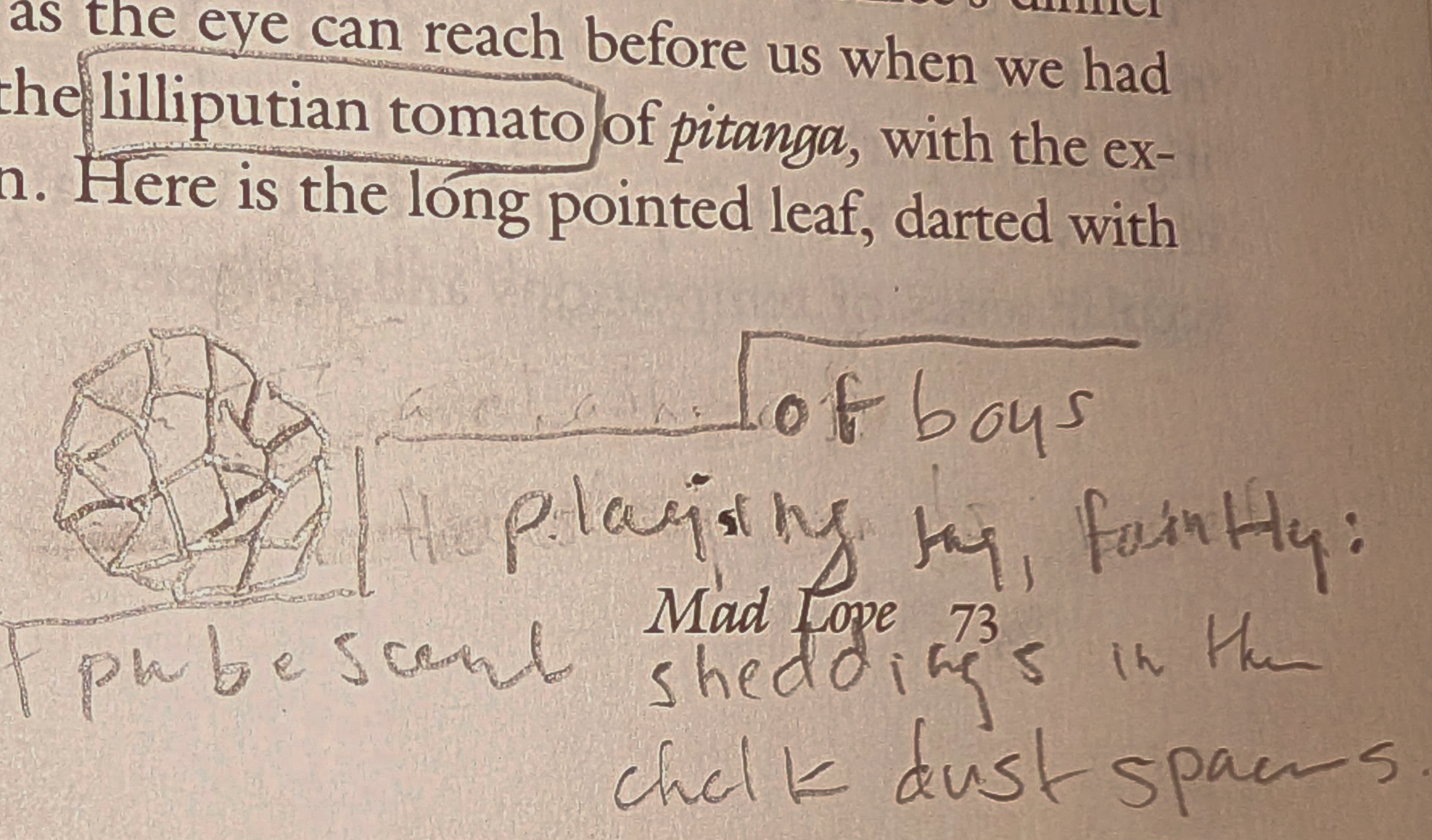
There are exactly ten such boxes, and they can be strung together to make a sort of ransom note poem. Their arrangement here is not random. “Isadore Ducasse” is, however, the first box in the book, and it can be considered the title of the poem. As for the book itself, the cover art is less than thrilling, but . . . .
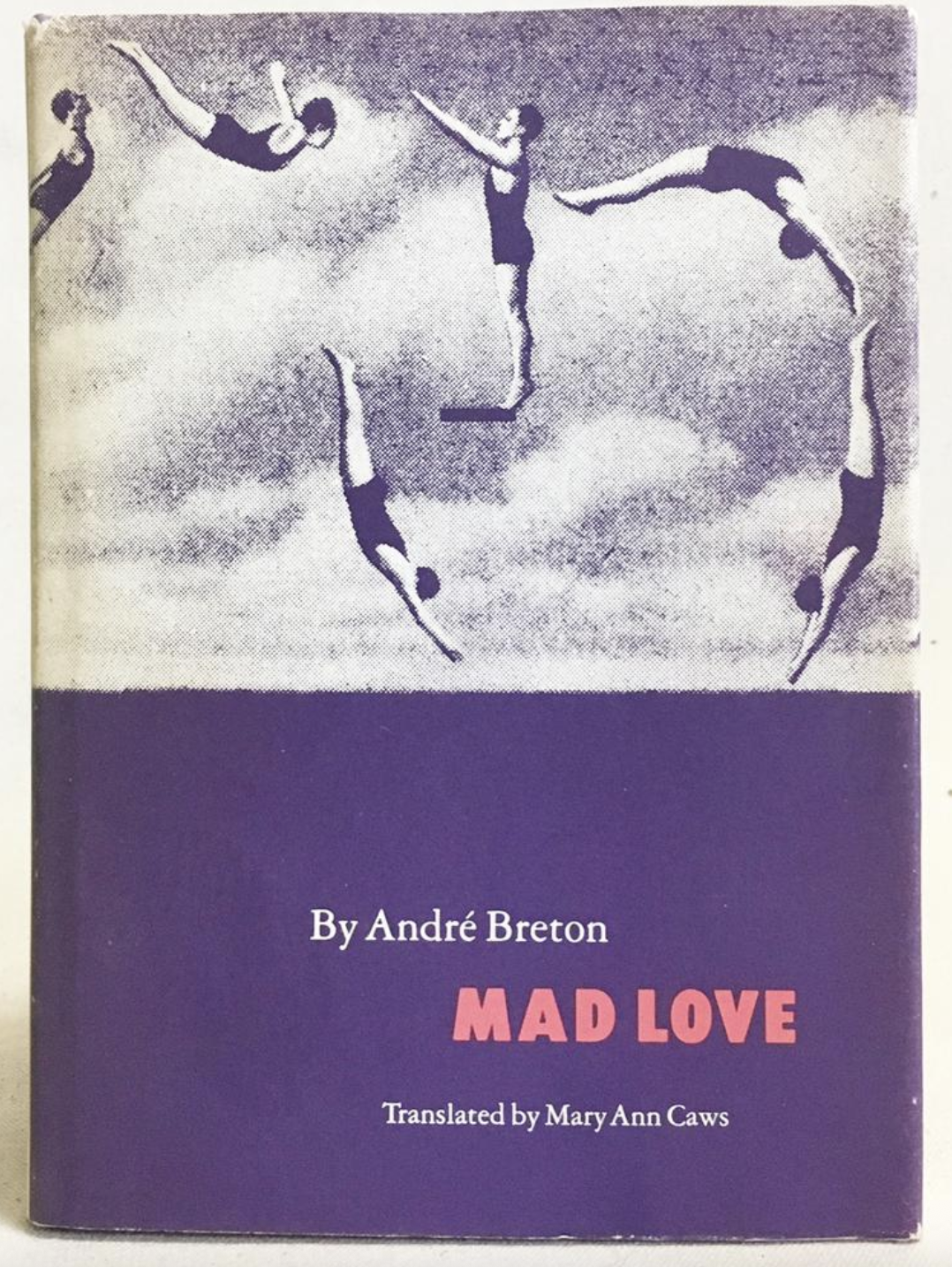
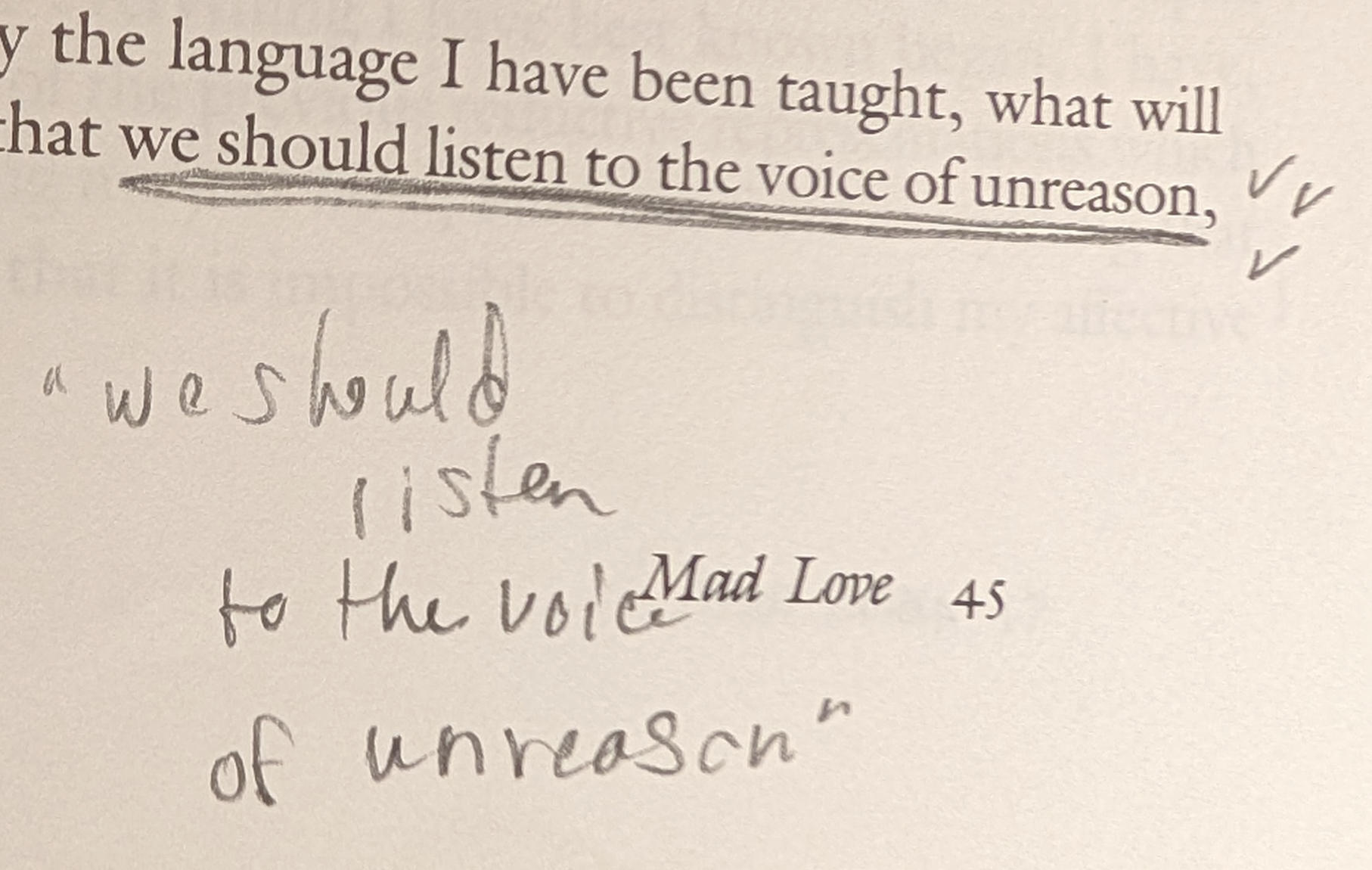
. . . maybe we’re not paying enough attention to the notes. The voice of unreason perhaps says this is a great cover.
At any rate, on to the assembled lines, non-meticulously photographed and edited in that delirious ransom note manner.
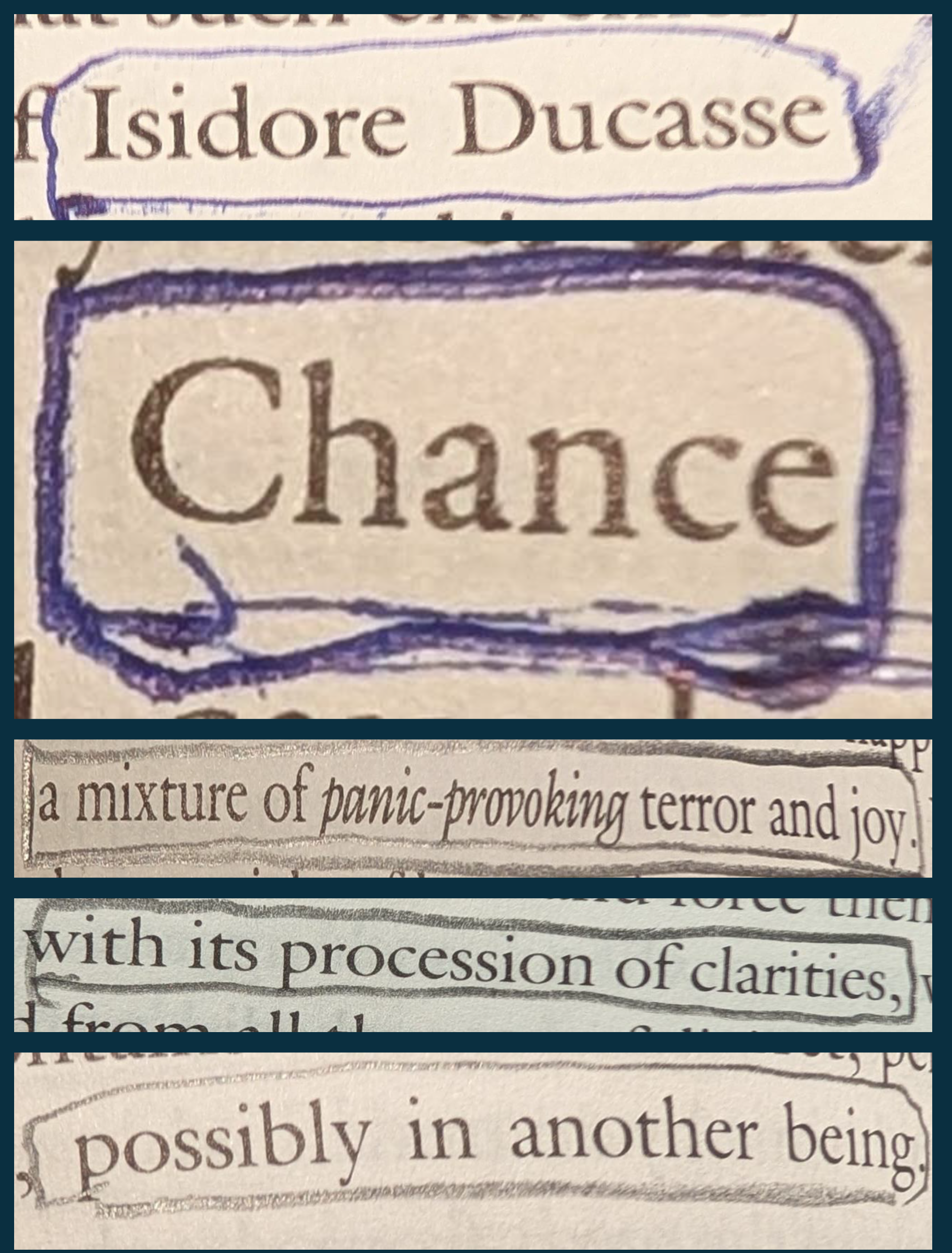
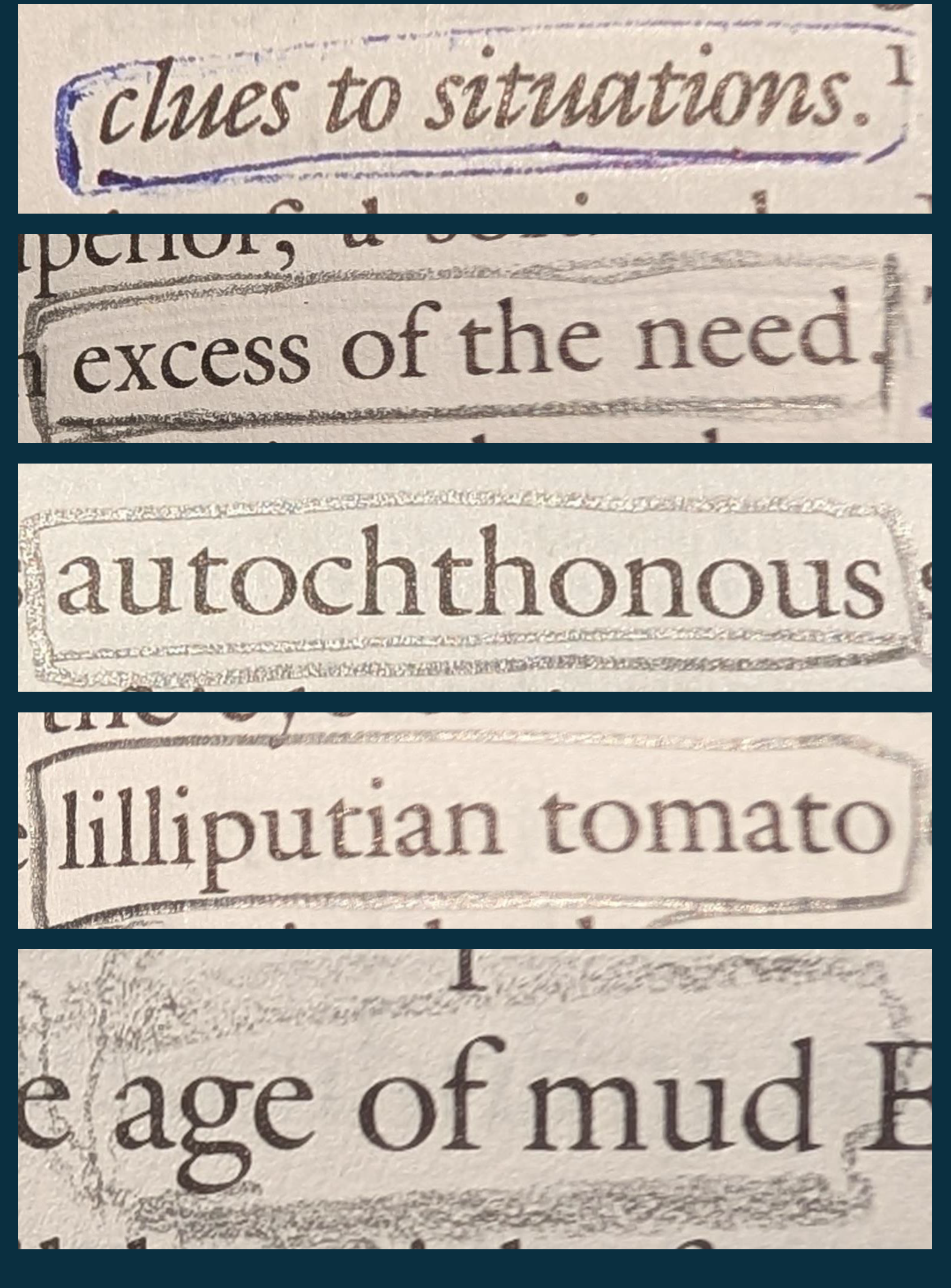
We like this as a poem, but we must run it, of course, and run it exactly as it appears in the book. Bing Translate is rarin’ at the megabit. That would be:
Isidore Ducasse
Chance
a mixture of panic-provoking terror and joy.
with its procession of clarities,
possibly in another being.
clues to situations.
excess of the need.
autochthonous
lilliputian tomato
age of mud
And we’ll base it on CHANCE, choosing as fast as the eye can alight, on Chhattisgarhi (no typos!), Hungarian, Arabic, Norwegian, Croatian, followed by a French palate cleanser, and the E will be back to English.
Isidor Dokasova
involuntary fear and his happiness.
With the discovery of light,
perhaps in the presence of another person.
Signs of revision.
Increased need.
Time for the combat clothing of the inhabitants of Lilliput.
Well! What was once a tiny tomato has become the mobilization of an entire tiny nation. Not going into the Swiftian weeds on Lilliput, which is outside the scope of these “signs of revision.” It could be noted that Gulliver’s Travels was published in 1726, and Isaac Newton, arguably the discoverer of light, died in 1727, but that just speaks to our “increased need” for cohesion. Dokasova, says Gemini, “is not a recognized word in any major European language. It appears to be a name, likely of Eastern European or Slavic origin.” Ducasse, of course, was Uruguayan/French, but as a child he experienced the tail end of the Siege of Montevideo in the Uruguayan Civil War, and he died, somewhat mysteriously, in 1870 during the Prussian siege of Paris. Those were times when the people had to put on their combat clothes . . . OK, it’s a bridge too far. But if we listen to the voice of unreason . . .
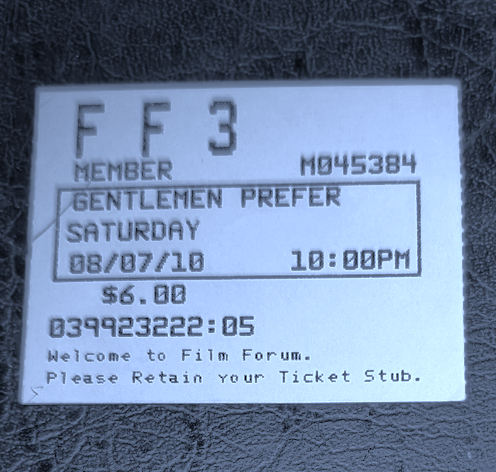
But wait! Earlier, a film ticket stub had fallen out of the book as I was paging through it, surely used as a bookmark, and it certainly wasn’t mine. It had been put aside. What was it again? Gentleman Prefer Blondes at the Film Forum in 2010.
Mad Love is dedicated to Breton’s wife at the time, Jacqueline Lamba, and Chat insists “the French Surrealist painter and wife of André Breton was a natural blonde. She was often described as strikingly beautiful, with fair hair and blue eyes, and many Surrealist contemporaries highlighted her luminous, almost archetypal appearance. Photographs from the 1930s and 40s confirm her light hair, sometimes styled in soft waves, consistent with the fashion of the time.”
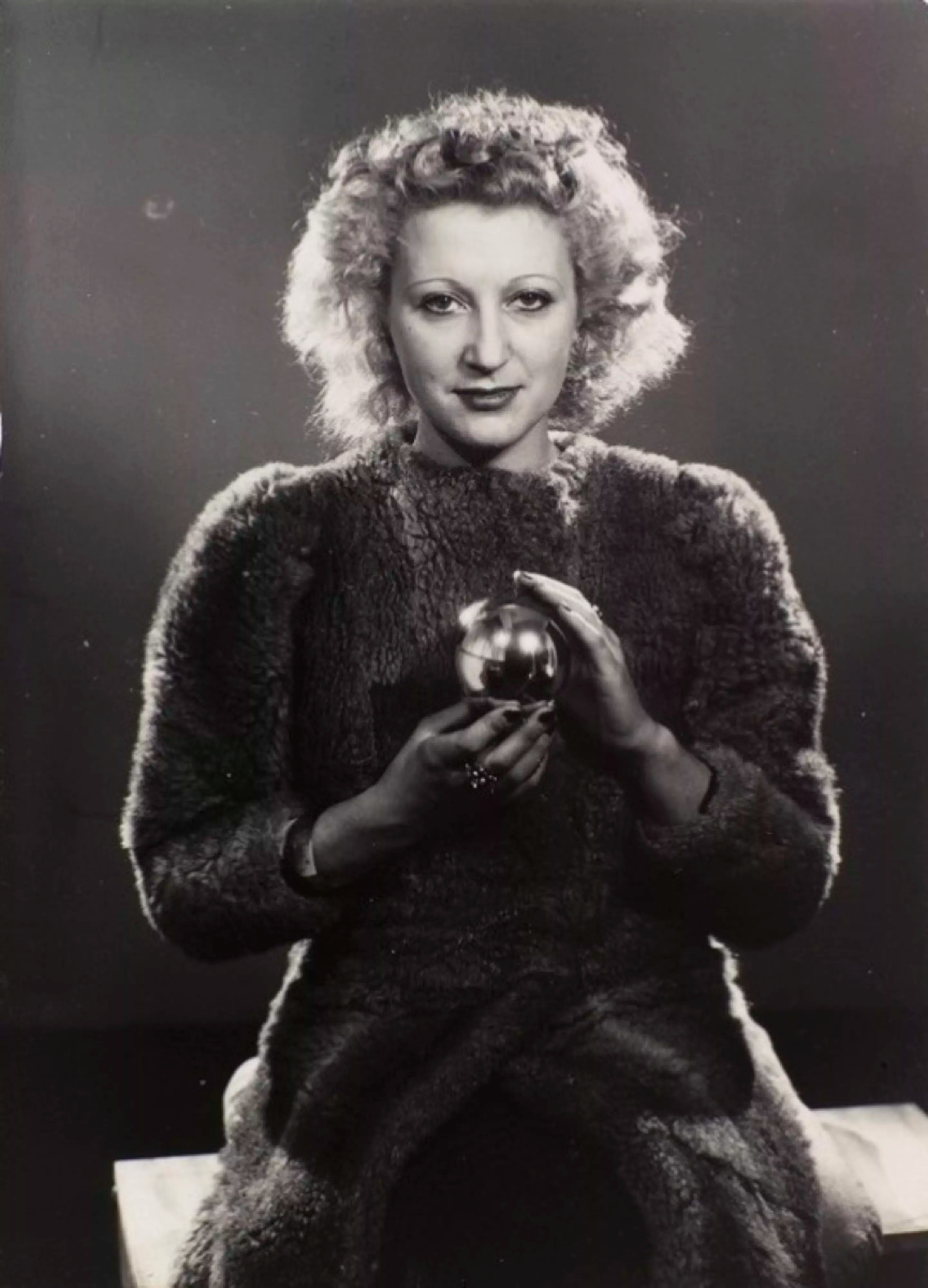
“With the discovery of light,
perhaps in the presence of another person.”
Suddenly these lines take on a whole new import. I ask Chat for specific examples of this from the text.
“The room was lit by the dazzling apparition of a young woman, with hair like a halo of light, her whole figure surrounded by luminous intensity.”
“She appeared to me like the sudden clarity of a lamp being turned on in a dark place.”
“She seemed to me born of fire, luminous and consuming, the blaze at the heart of love itself.”
“She is the solar woman — dazzling, unique, the one who brings light to the opaque world.”
So move over, Isaac. BTR, in its impenetrably oracular wisdom, found its way to the luminous heart of love itself. And did the previous owner of the book use this ticket as a bookmark in the full knowledge of the light it would bring to the opaque world? Of course she did!




 Death Palette . . . . . . . . .
Re the marriage to Lamba, well, the light went out in 1942 in New York, where his wife was having an affair with the artist David Hare. From Mark Polizzotti’s superb Breton bio: <Once Breton did finally recognize that his marriage was failing, he seemed, as at the end of his affair with Suzanne, to have little understanding of the causes. “Awful, terrible depression,” he confided to Péret on August 27. “Everything in life is very dark: as for Jacqueline, incomprehensible (moving further away, becoming lost) . . .” He spent the late summer and fall in a state of dazed anger and sorrow.>