Duchamp Birthday: Eros, Love in the Forest, and Cotton-like Corn
Leave a commentJuly 28, 2026 by tsk2001
It’s Duchamp’s birthday. Something has to be done. Popped up on me unexpectedly, as usual, I don’t put it on my calendar. Hey, Gem, have I asked this before? Did Duchamp write poetry? “Yes, but not in any traditional literary sense,” says Gem, ignoring my question about asking it before. Gem goes on to note: Under his female alter ego, Rrose Sélavy (a phonetic pun on “Eros, c’est la vie” or “Arrose la vie”), Duchamp crafted hundreds of dense, poetic puns, aphorisms, and spoonerisms.
Well, let’s put a fork in some spoonerisms to see if they’re done. I pull six puns out of Gem, original French and English translation (which almost assuredly are completely devoid of the meaning Duchamp intended), and they can be presented as a poem in the order in which Gem numbered them:
Eros, that is life. Water life.
Incest or family passion, through moves drawn too far.
Abominable lampshades, with words placed as lampshades brought to light.
The nursing child is a blower of hot flesh and does not like hothouse cauliflower.
Have you ever put the marrow of the sword into the hair of the beloved?
Suit of clothes from thread to needle, without a needle.
Let’s title this baby Hothouse Cauliflower and ask Chat (sorry, Gem, you’re not alone in this game) to illustrate that image in an early Duchamp style.
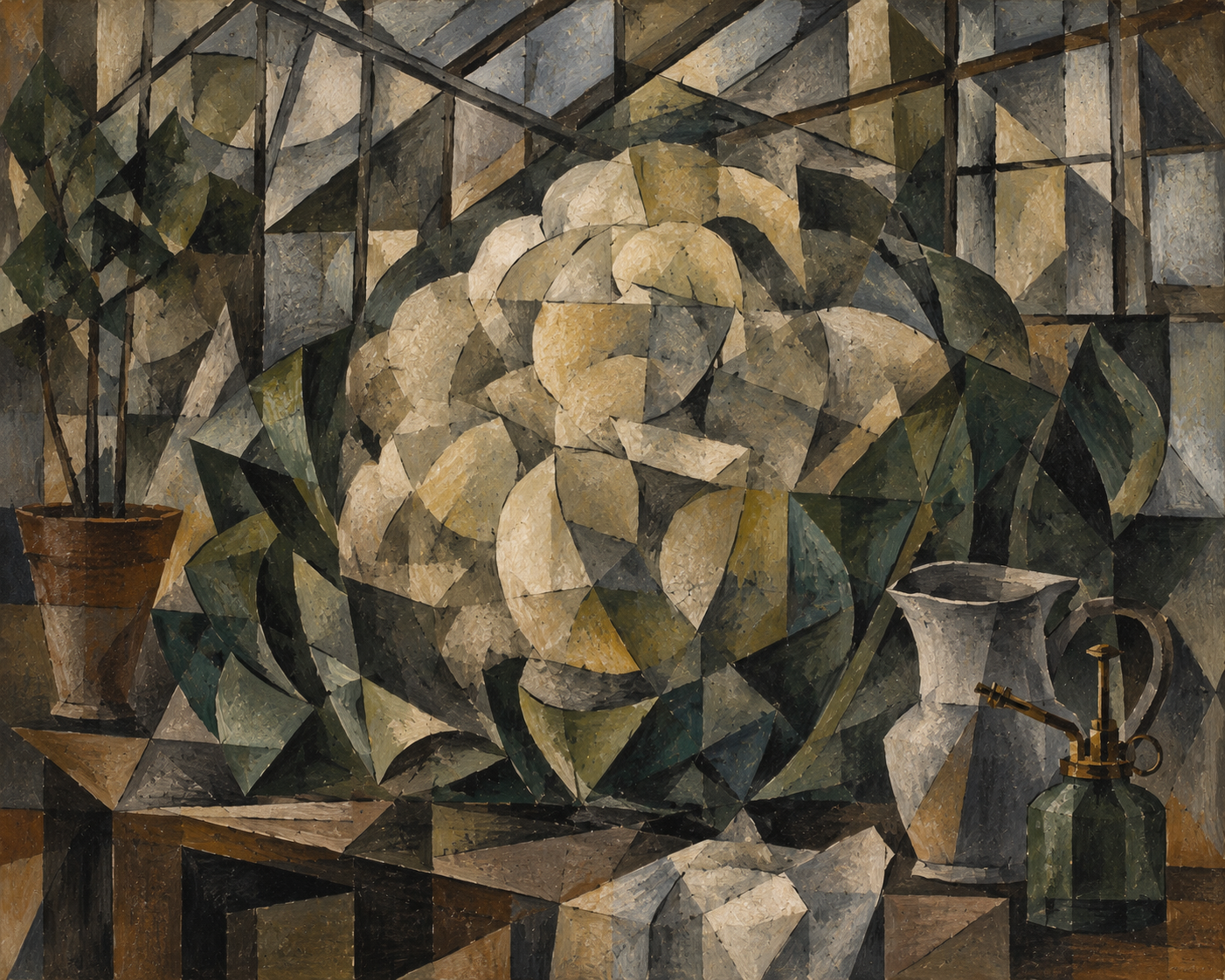
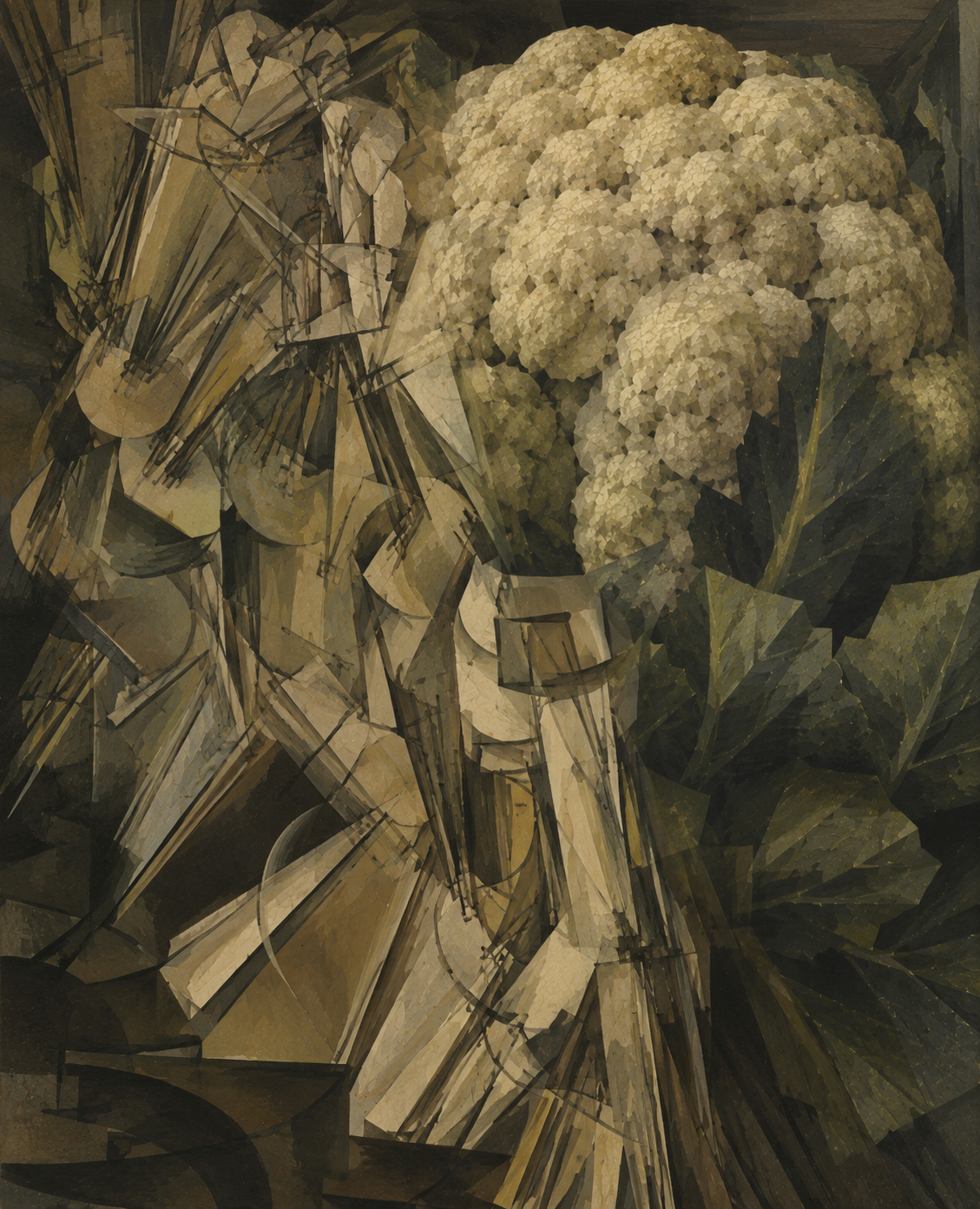
Chat calls the image on the left a “muted palette, faceted geometry, and restrained atmosphere associated with Duchamp’s early Cubist-influenced paintings, while preserving the monumental cauliflower as the central motif,” like its writing the museum label. I request a melding of Hothouse Cauliflower with Nude Descending a Staircase and get the image on the right. “The composition fuses a monumental cauliflower with a fractured, descending figure, creating a playful Cubist-inspired homage that echoes the energy of Duchamp’s early modernist period without reproducing the original painting,” Chat notes like it’s selling the work at Sotheby’s. “Would you like the cauliflower itself to become the ‘descending’ form, dissolving into repeated geometric slices as it moves down the staircase?” No! Just needed something to illustrate the page, now stop it!
Gotta run this. It’s a MARCEL conceit, which I’m sure I’ve used before, but the languages will vary. Marwari, Albanian, Rundi, Croatian, Estonian, Limburgish (Bing Translate is expanding like the universe), and back to English.
Eros, yes, lust for life. Water is life.
Love in the forest or love of family reaches the highest level.
Untamed handwriting, sly words understood as handwriting, made to show it.
A child who writes the name of a boy, throws him warm meat and is not happy with the sweet potato from the apple orchard.
Have I ever stuck a sword in my love’s chest?
Cotton-like corn, without the lie of corn.
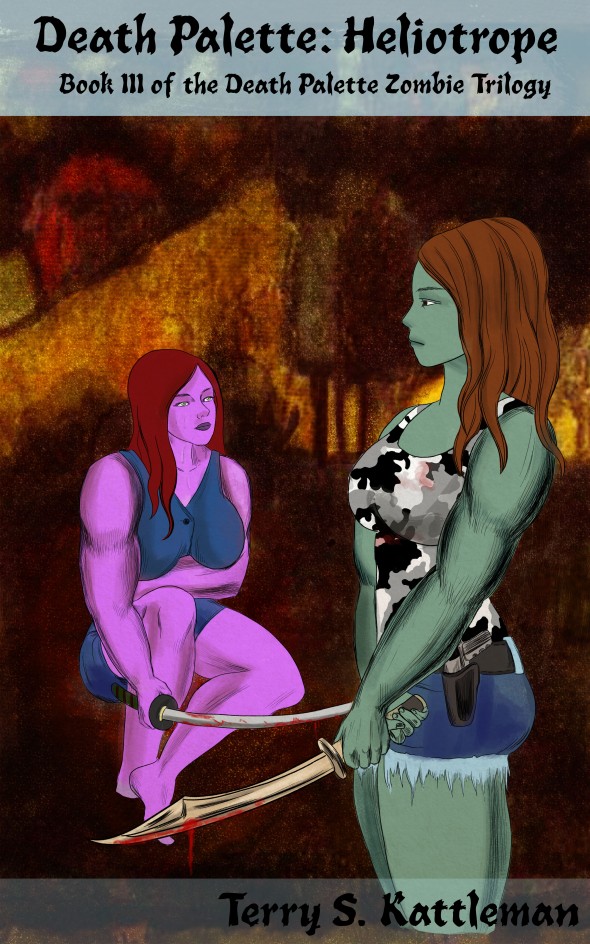
Well, this is good, and oddly self-reflexive with that “untamed handwriting” line wearing a lampshade on its head, while the sword stuck in my love’s chest is right outta the Death Palette series. We’ll have to call this Sweet Potato from the Apple Orchard, which sounds like a Cannonball Adderley record, the title tune written by Joe Zawinul. All right, now I stepped in it. Chat, gimme that record cover.
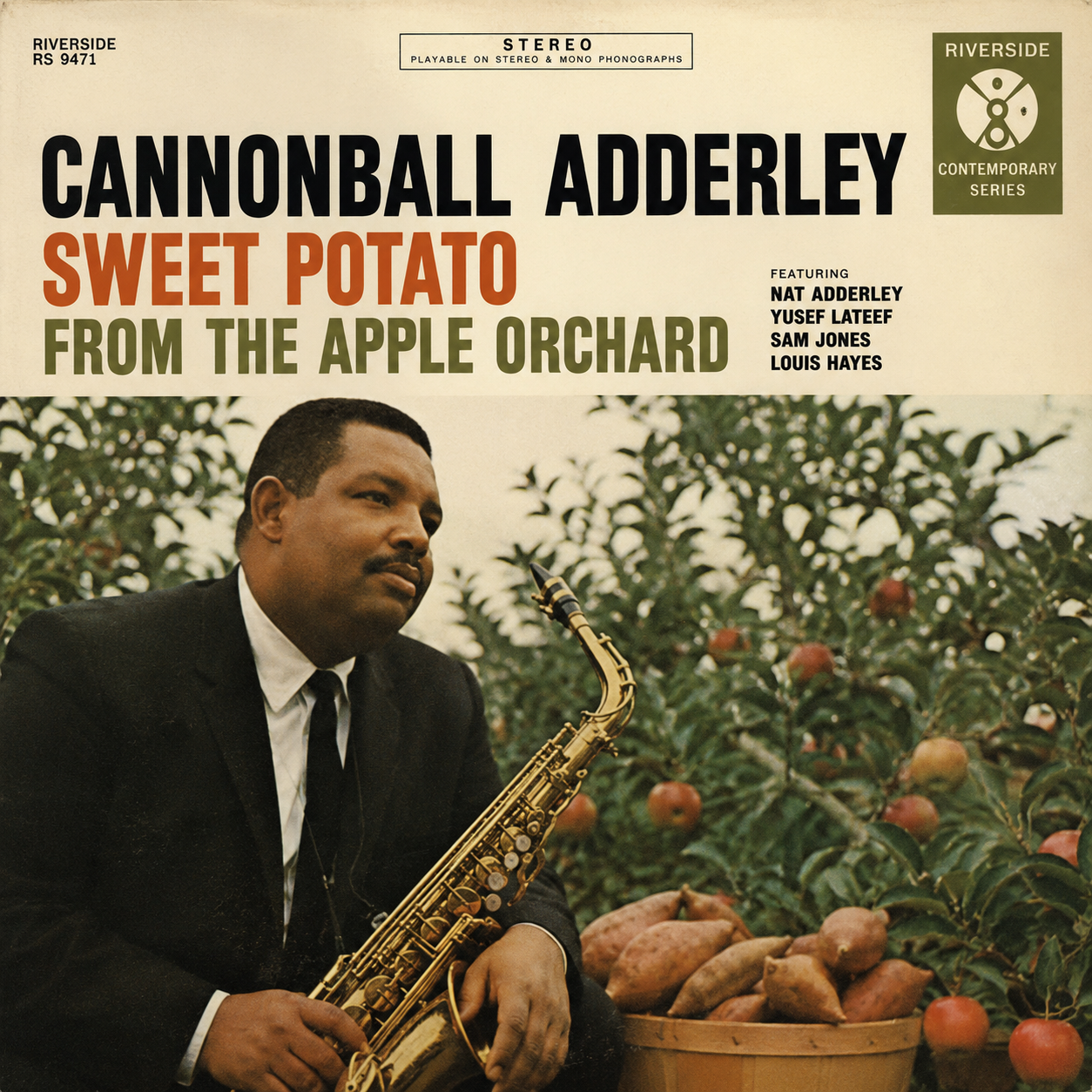
I did not mention Joe Zawinul, and Chat did not intuit Joe Zawinul. Or maybe it did and it’s just throwing me warm meat. In fact, this is the personnel of the Cannonball Adderley Sextet in New York record, on Riverside, with the conspicuous absence of Joe Zawinul, and maybe that’s the point. “Sly words understood as handwriting, made to show it.”