Stalking Bellmer’s Twisted Sisters in the Ghost Mall
Leave a commentJuly 25, 2026 by tsk2001
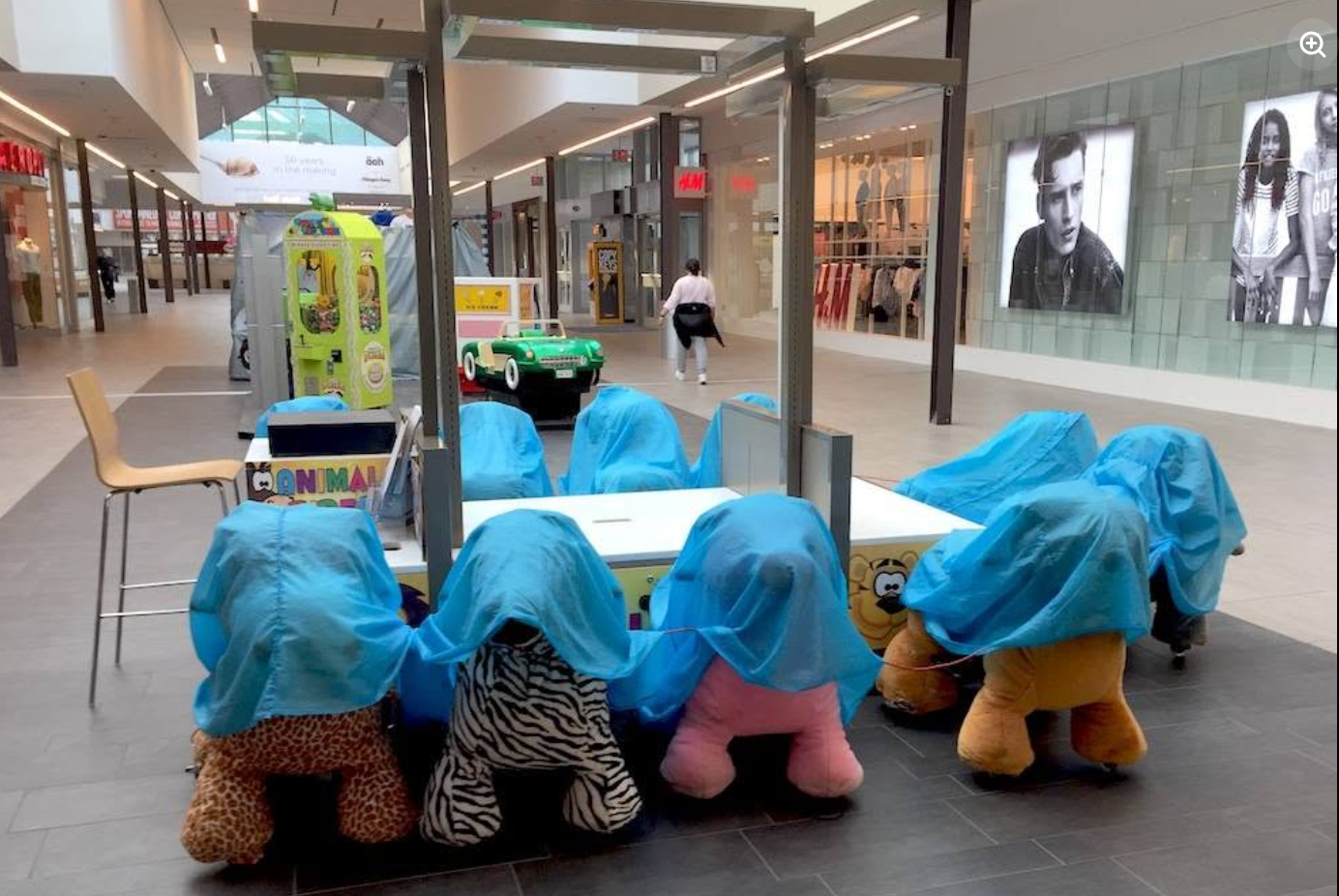
A visit to the ghost mall on a day too hot to be outside. The ghost mall in question has thriving anchors: a Target at one end and an IKEA (and a very loud video arcade) at the other. In between, in the mall proper, is a vast array of abandoned spaces and maybe half a dozen functioning stores, the void patrolled by four clearly uncomfortable security guards. Mall foot traffic, of course, is not worthy of the name. The Macy’s, which closed during Covid, sits like an exhausted white elephant, a windowless haunted hulk that peers over the parking lot in blind obsolescence, but its interior entrance has been walled over into a sort of stage set from a terrible production of Strindberg with an incoherent blitz of mirrors on the wall and even a little library with a single chair on a tiny rug. Walking the mall now is like joining J.G. Ballard on a tour of drained swimming pools in an ominously empty gated ex-community. But there is art to be had here. Could this be a Jim Dine installation?
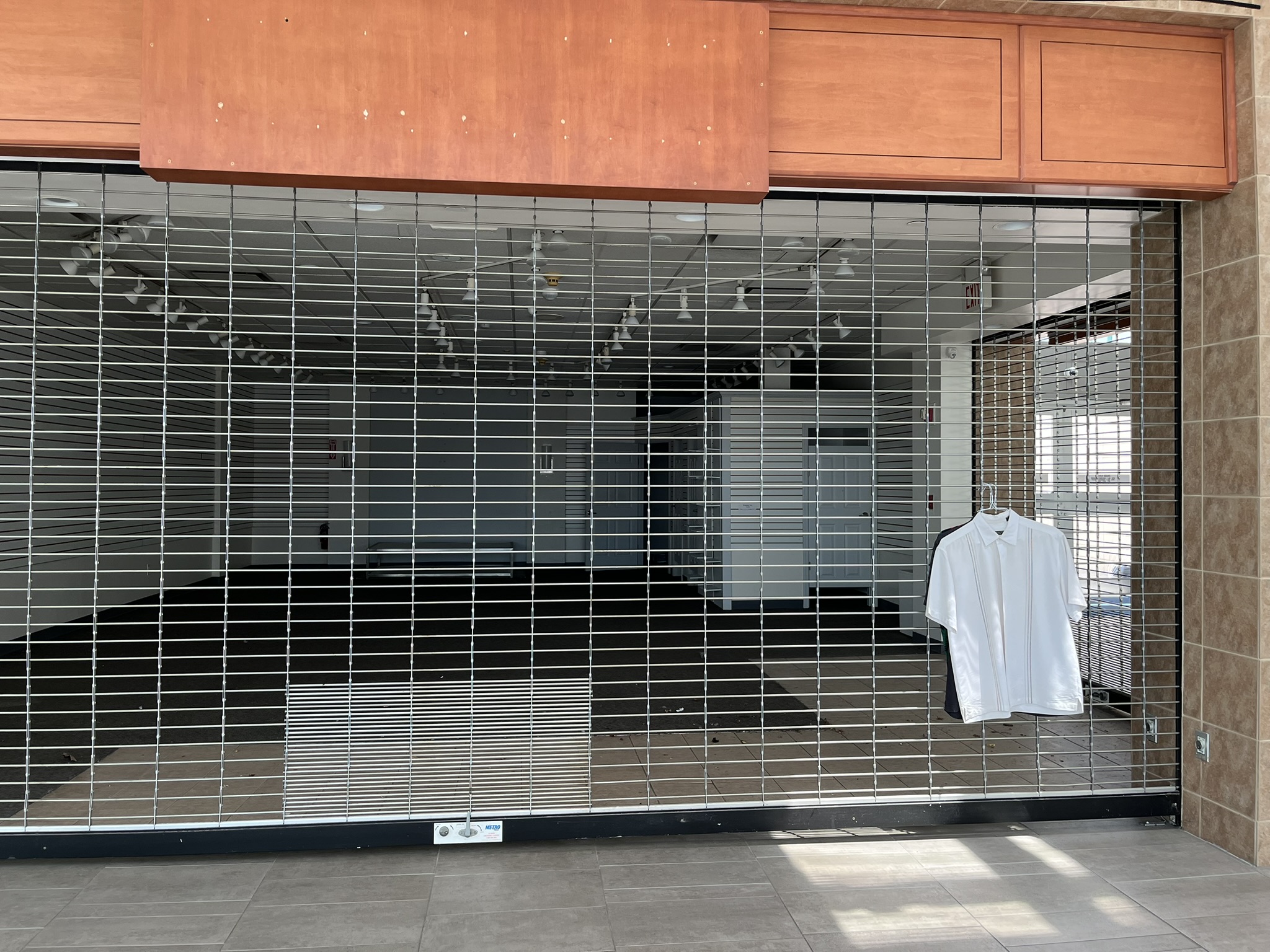
One derelict space in particular speaks of a dream of Hans Bellmer’s, or perhaps it’s his recurring nightmare.
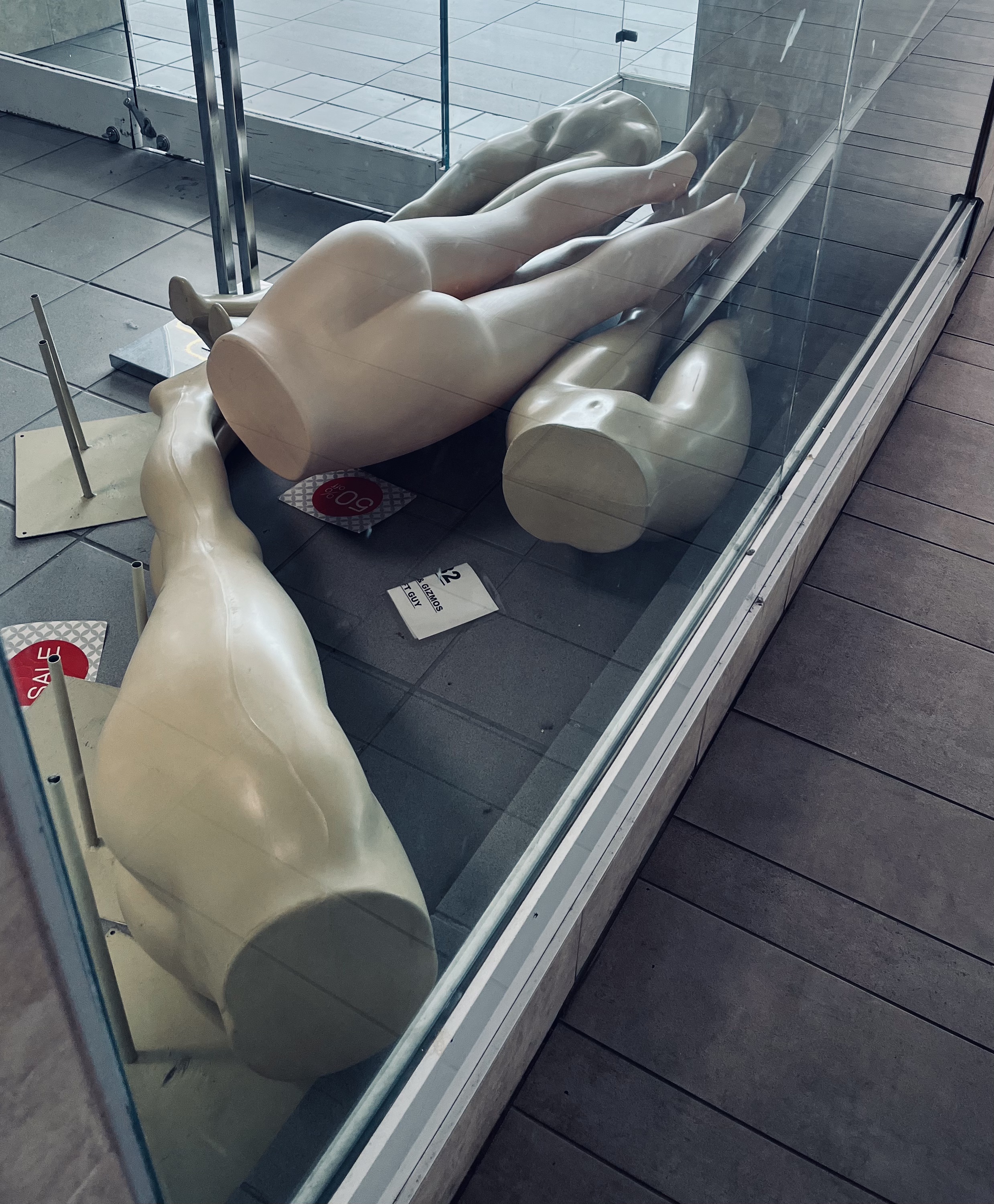
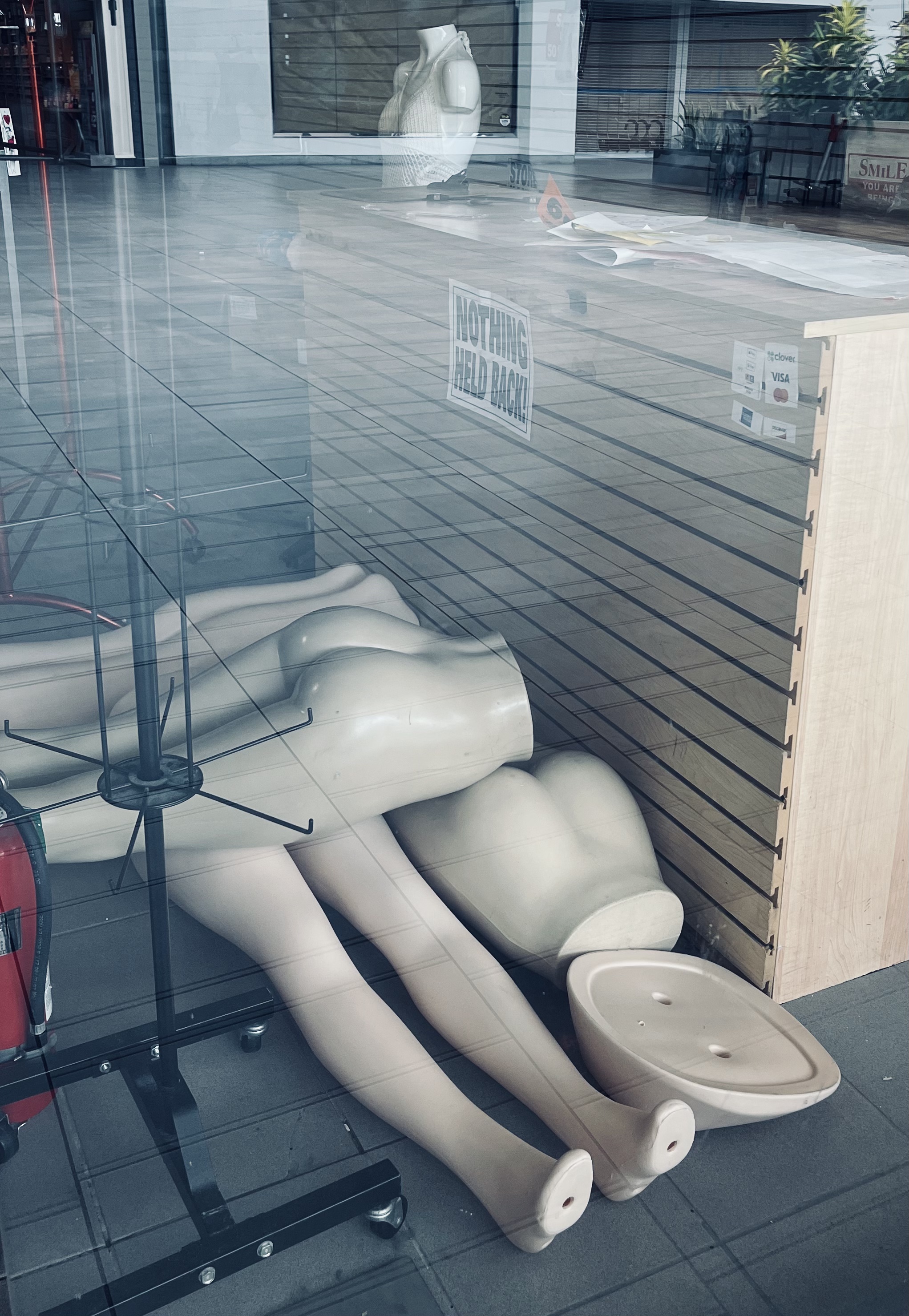
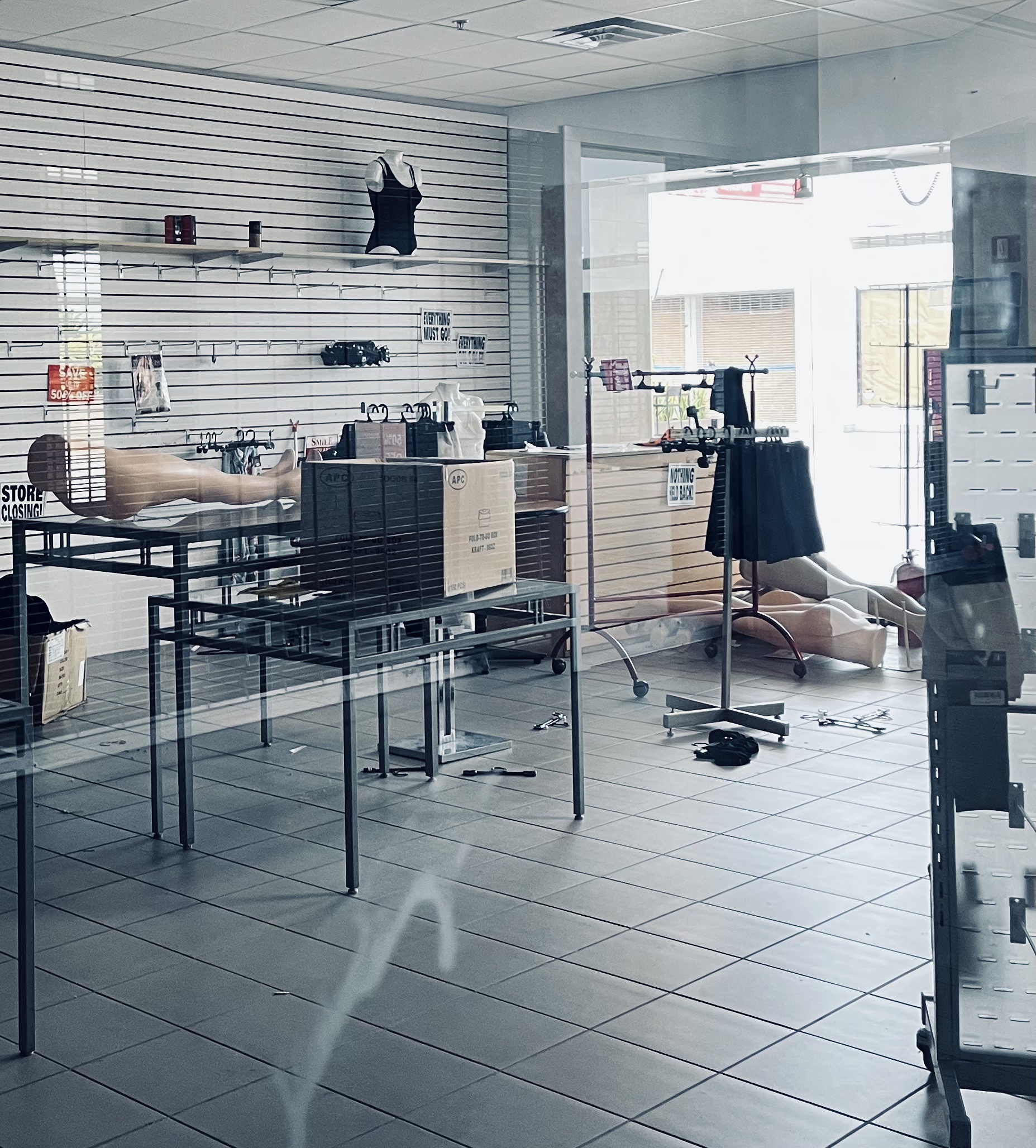
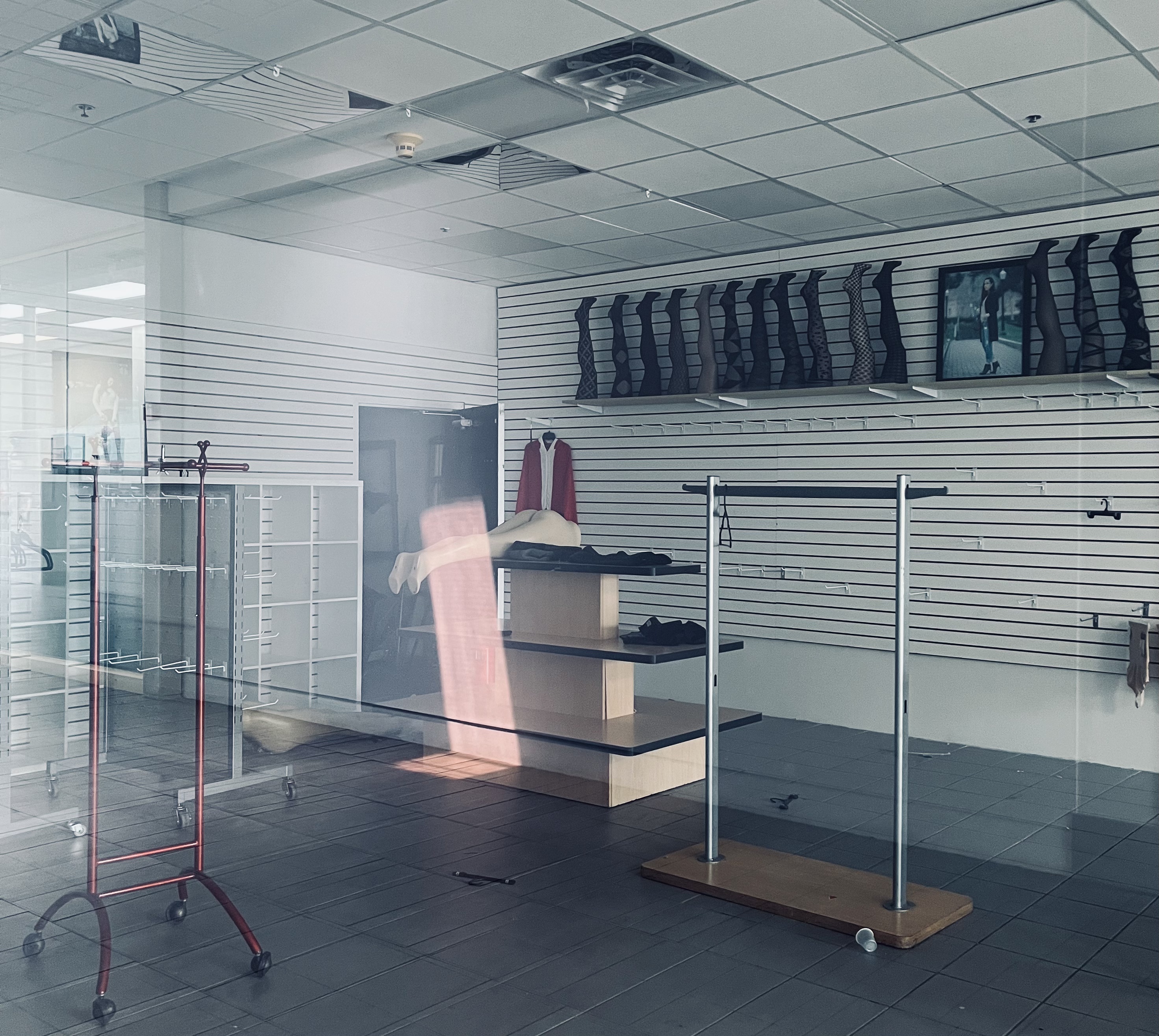
Nothing held back, indeed, as the sign says. Bellmer came to mind earlier during a visit to the mall, when it wasn’t quite as desolate as it is now. Here’s a long-ago window display that is very balls-out La Poupée, one might say.
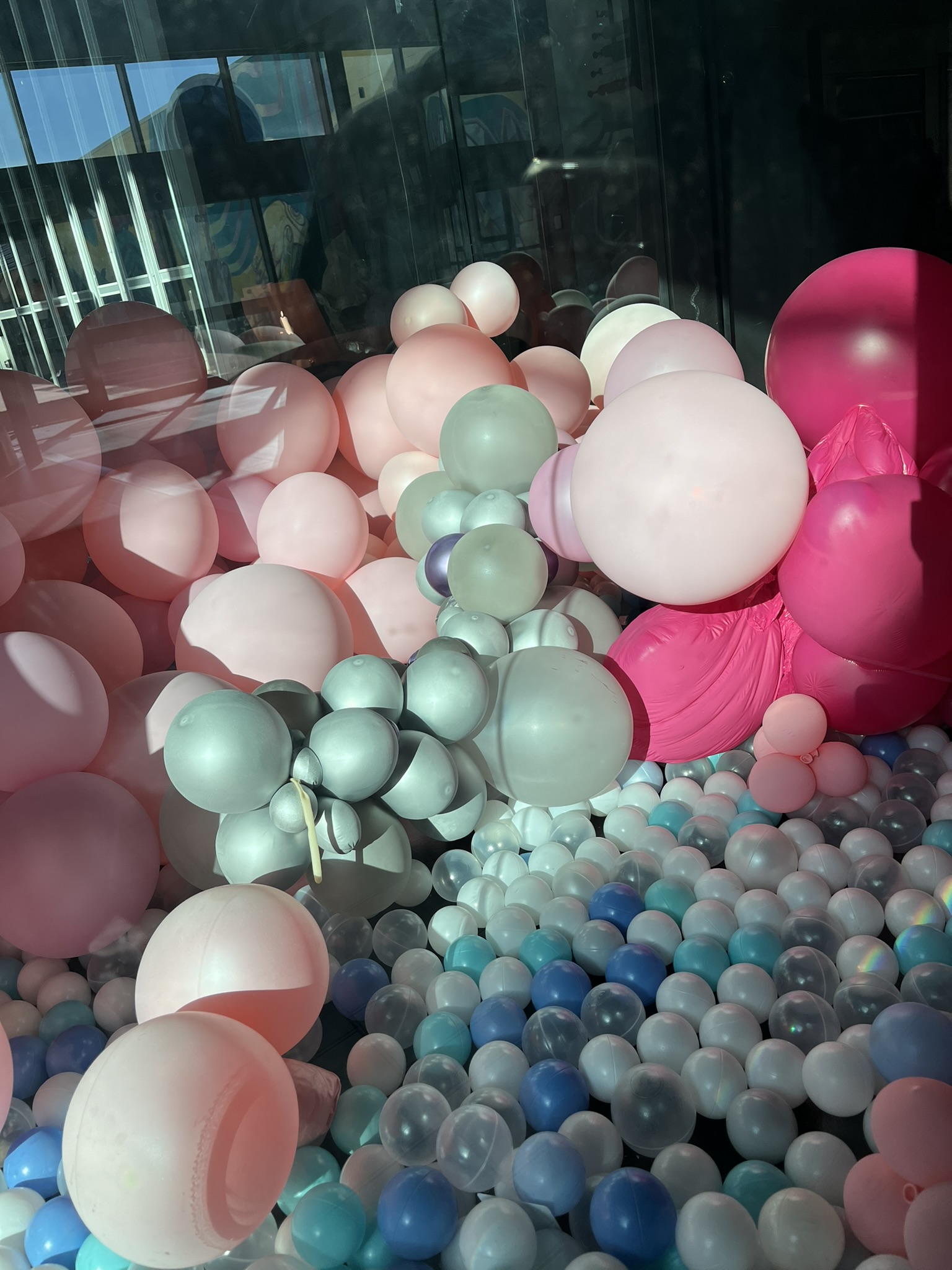
There was also at one time this possibly Magritte-inspired intervention, perhaps intended as an anti-Guantanamo statement.
But the mall’s curious art history aside, the question before us now is: Did Bellmer write poetry? Gem says yes. “Bellmer’s most direct venture into poetry was through anagrams, a technique he pioneered alongside his partner, the writer and artist Unica Zürn. Bellmer viewed language much like he viewed his articulated dolls: a body made of parts that could be disassembled and reassembled into new forms.”
What is an anagrammatic poem, as Gem calls it? In the case of Bellmer, it’s:
The Line-by-Line (Matrix) Anagram. The Rule: The poet takes a single “seed” phrase or title. Every single line in the poem must be an exact anagram containing only and all the letters from that original seed phrase, using no extra or missing letters. The Effect: It treats language like a closed set of physical building blocks. The same exact pool of characters is dismantled and re-assembled down the page, generating a uncanny, subconscious progression of imagery.
Yes, Gem said “a uncanny.” I will overlook this. I’m sure it’s very busy collecting tokens. Gem offers up a pair of these poems and I grab the first one and run with it, which is translated from the French by Pierre Joris, and Gem notes that in translation these poems must lose their anagrammatic structure, but no matter.
In the Dust of This Life
Pale sieves a tired.
Ax in the tree’s bosom.
In the foliage’s broom there is
Seed-blood-silk.
Bites in the lovenest of the building.
Sweetly fogs in its ice-bath
the Ibis’s blood.
Masses in the dust of this life.
Let’s BTR this with a GHOST conceit: Georgian, Hausa, Odia (a classical Indo-Aryan language spoken in the Indian state of Odisha), Swedish, Tongan, and back to English, which yields:
In this way of life
A young person is walking.
There is a walk on a boat.
In the branch of the tree, there is
a silk boat.
A beautiful part of the end is wasted.
Happy in not swimming in ice
Is the blood of IBI.
In this way of life, man is foolish.
Clearly inferior to the original, not particularly revelatory, and seems to be mainly about boats. In fact, among the many IBI acronyms a Bing search turns up is the International Boat Industry. Could this be a nod to The Drunken Boat? Is Rimbaud being magically invoked? Nah. Let’s try the other anagrammatic poem that Gem offered:
Once Upon a Time Small
Once upon a time a small
warm iron was alone. No
Noise, no wine let in.
Lightly at the sea ran, while no
Ice was, thrush-pink in a
See-egg. All wink: tear
like all seeds.
Sink in, watergerm, no, alone — in a pillow.
All warmth once upon a time’s a mall.
Good God Awmighty, it’s about a mall! A mall encased in a cold, wine-deprived loneliness. It’s the very mall that summoned the Bellmerian mannequins from erotic hell. Haven’t even run it yet and we hit oracular paydirt! “Thrush-pink in a see-egg” is so Poupée perfect it’s probably against the law and will have to be redacted. At any rate, this must be run on the very same conceit as the first, which yields:
First, there were small objects
There was a picture of a warm metal
corner. There was no sound, no one
could touch it. In the width of the sea,
the seaweed moved, at a time when
there was no ice, in a pink-colored sea.
Everything sank in the
boxes: the different things were happily mixed. No
one could look into the mirrored water,
and there was only one – the depth of
the people living below. The warmth
felt like a painting wall.
It’s worth noting in passing that Bing Translate did not distort the lineation in these poems to produce its usual prose-poetic block. But why? Ours is not to reason this. While there are lines here that may speak of the ghost mall, particularly the title and “Everything sank in the boxes,” this is not screamingly sibyllic. Wait, “There was a picture of a warm metal corner” could be any of the mannequin photos. It could be the opening line of a Ballard novel about men who abuse mannequins for photographic “art” purposes. As Bellmer insists, “The body is like a sentence that invites us to rearrange it, so that its real meaning becomes clear . . .”
And so too the ghost mall.